

The Problem It Solves
Decentralized communities face major issues when funding public goods:
Whale Dominance
Token-based voting lets large holders control outcomes, drowning out small but genuine contributors.No Privacy
Votes and funding actions are publicly visible on-chain, exposing voter behavior and discouraging honest participation.Sybil Attacks
Anyone can create multiple wallets to gain unfair influence, breaking the idea of democratic decision-making.Poor Funding Signals
Communities lack a reliable way to identify projects with real grassroots support instead of concentrated backing.
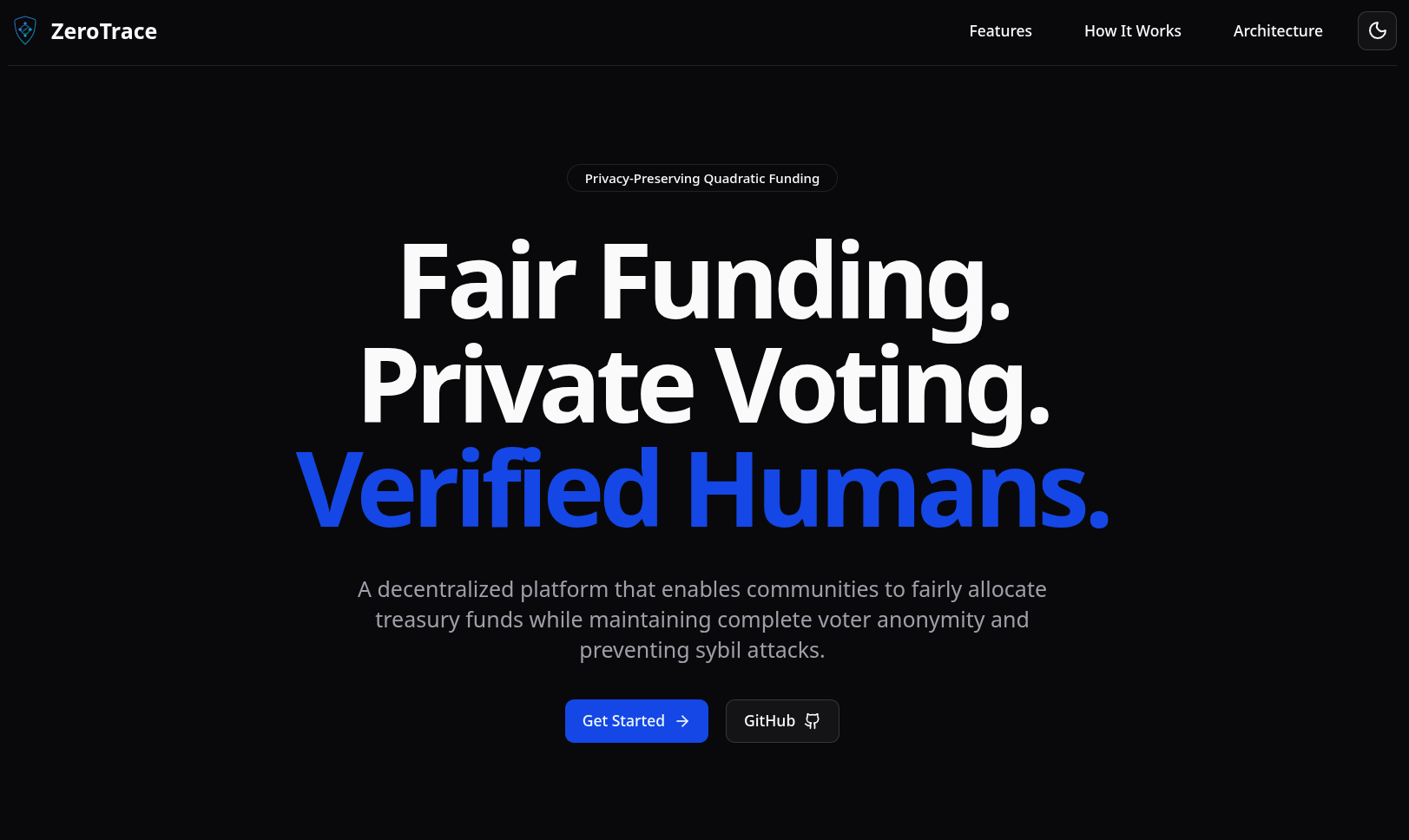
ZeroTrace solves this by combining:
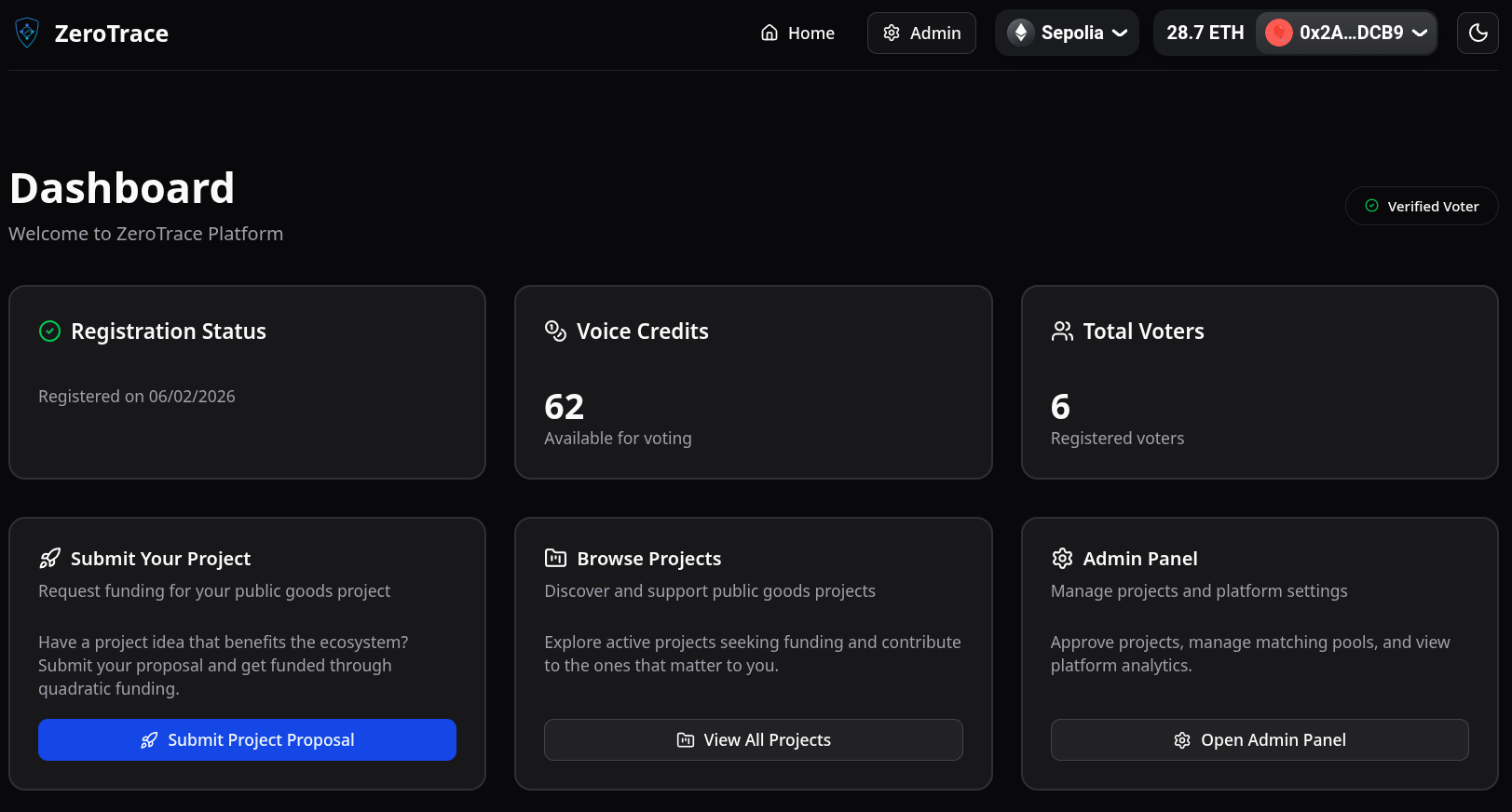
- Quadratic Funding: So many small contributions outweigh a few large ones.
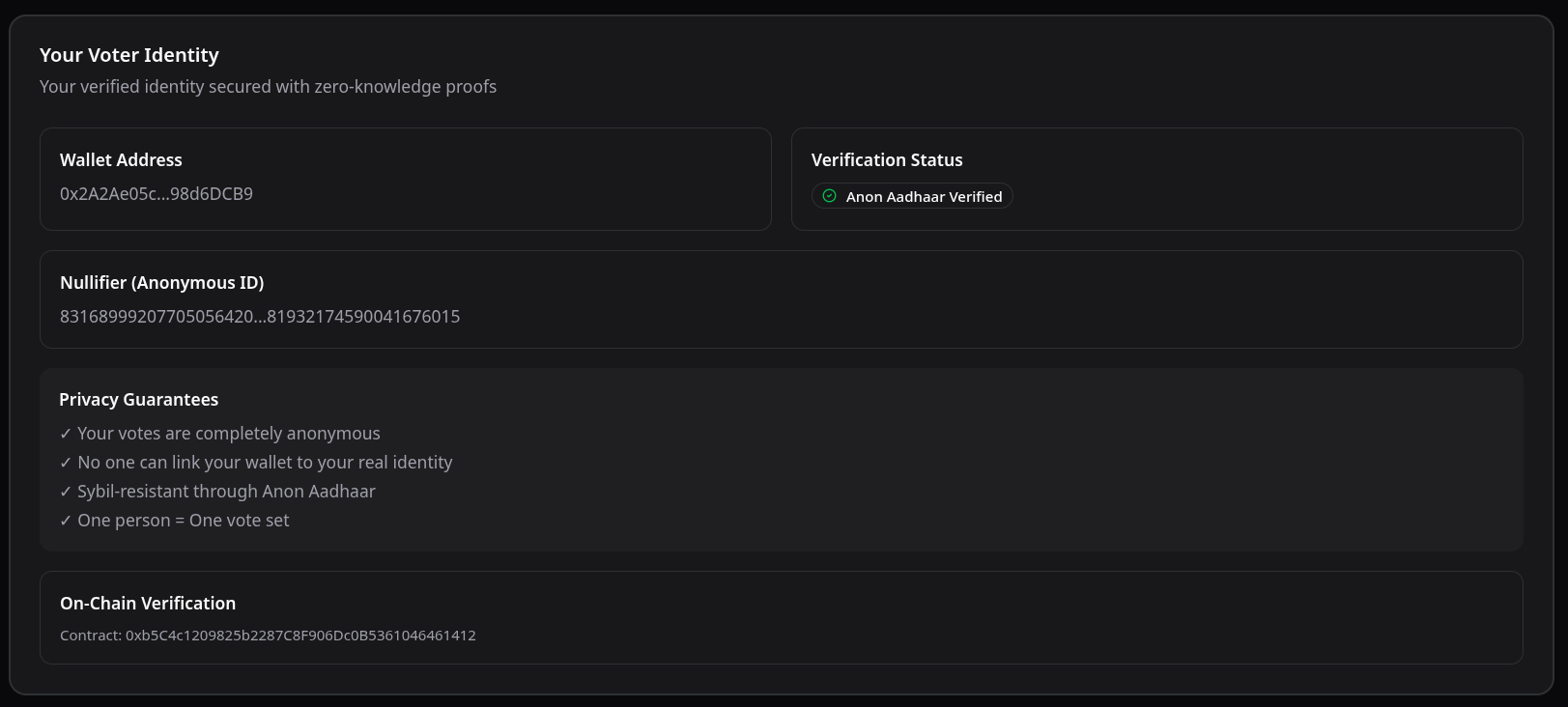
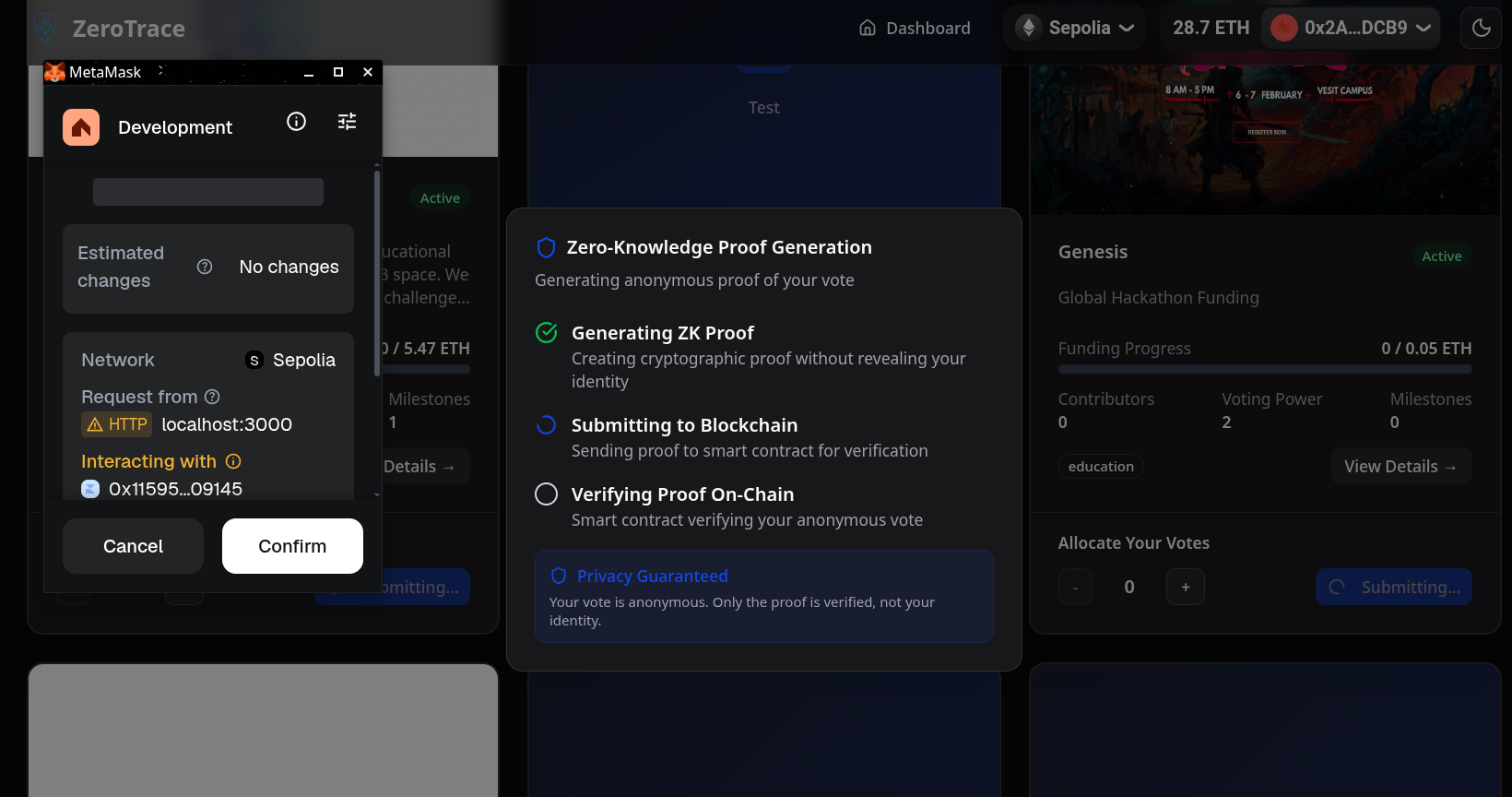
- Zero-Knowledge Proofs: To enable anonymous but verifiable voting.
- Sybil Resistance: To enforce one-person-one-vote without revealing identity.
Result:
- Fair influence for every participant
- Fully private and unlinkable votes
- Funding goes to projects with real community support
Challenges We Ran Into
Privacy vs Verifiability
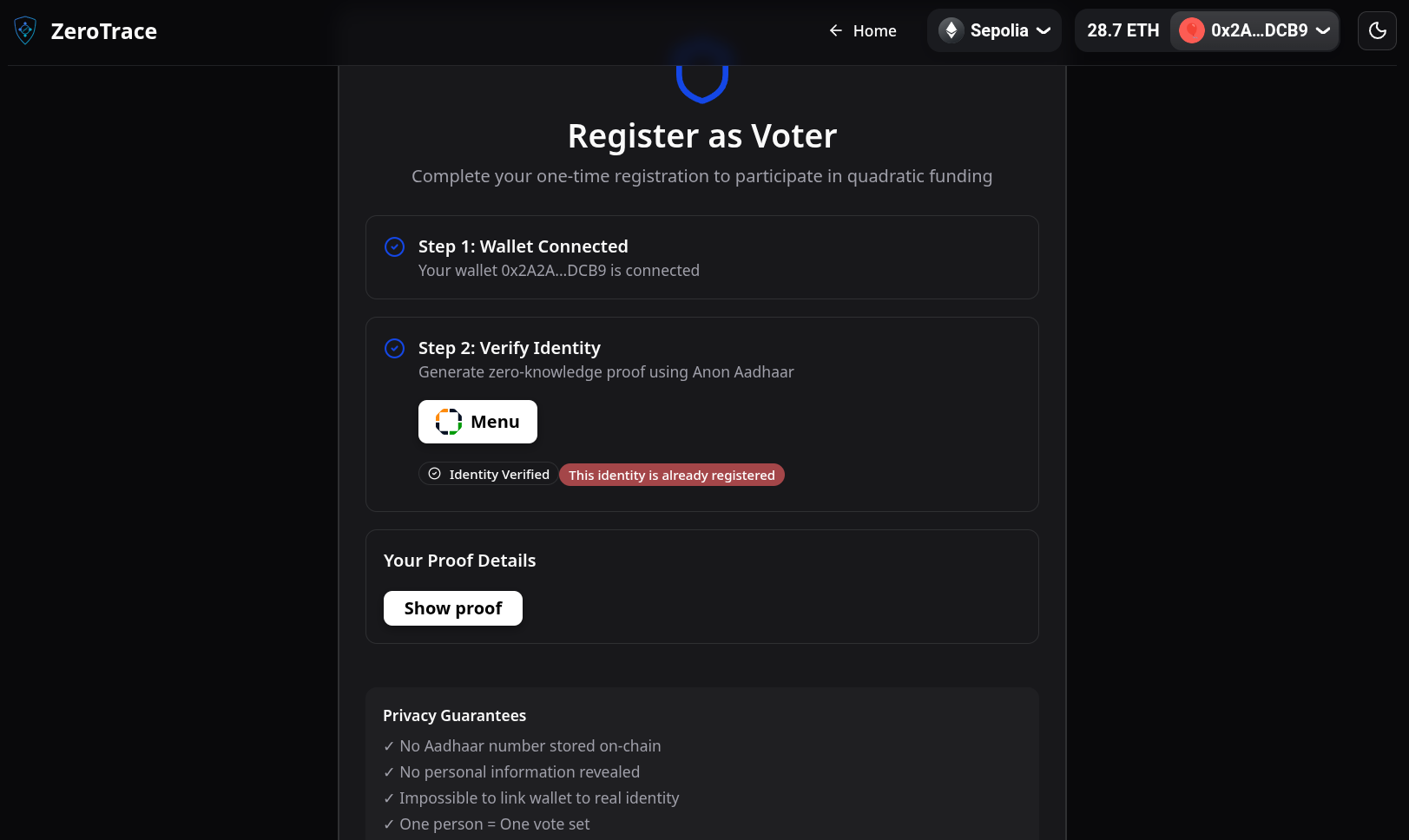
Making votes anonymous while still preventing double voting required careful nullifier and ZK-proof handling.Sybil Resistance Without Identity Leakage
Ensuring one-human-one-vote without storing or exposing any Aadhaar or personal data on-chain.Quadratic Voting Complexity
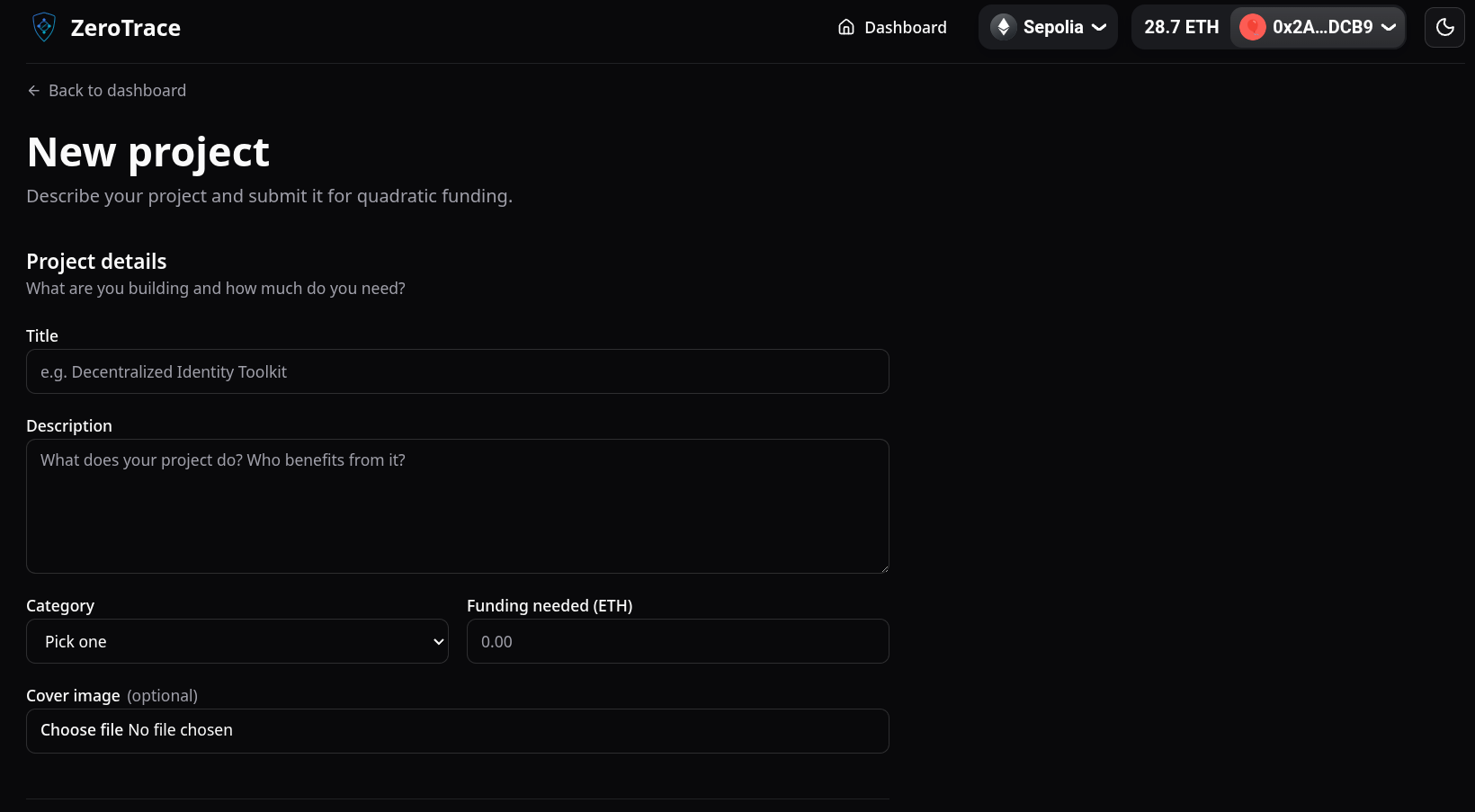
Quadratic cost calculations are non-linear and gas-sensitive, requiring optimized smart contract and off-chain design.Preventing Spam Projects
Permissionless submissions needed stake-based rules, cooldowns, and caps without discouraging real builders.User Experience with ZK Tech
Hiding complex cryptography behind a simple “connect → vote” flow was a major UX challenge.Minimizing Centralization
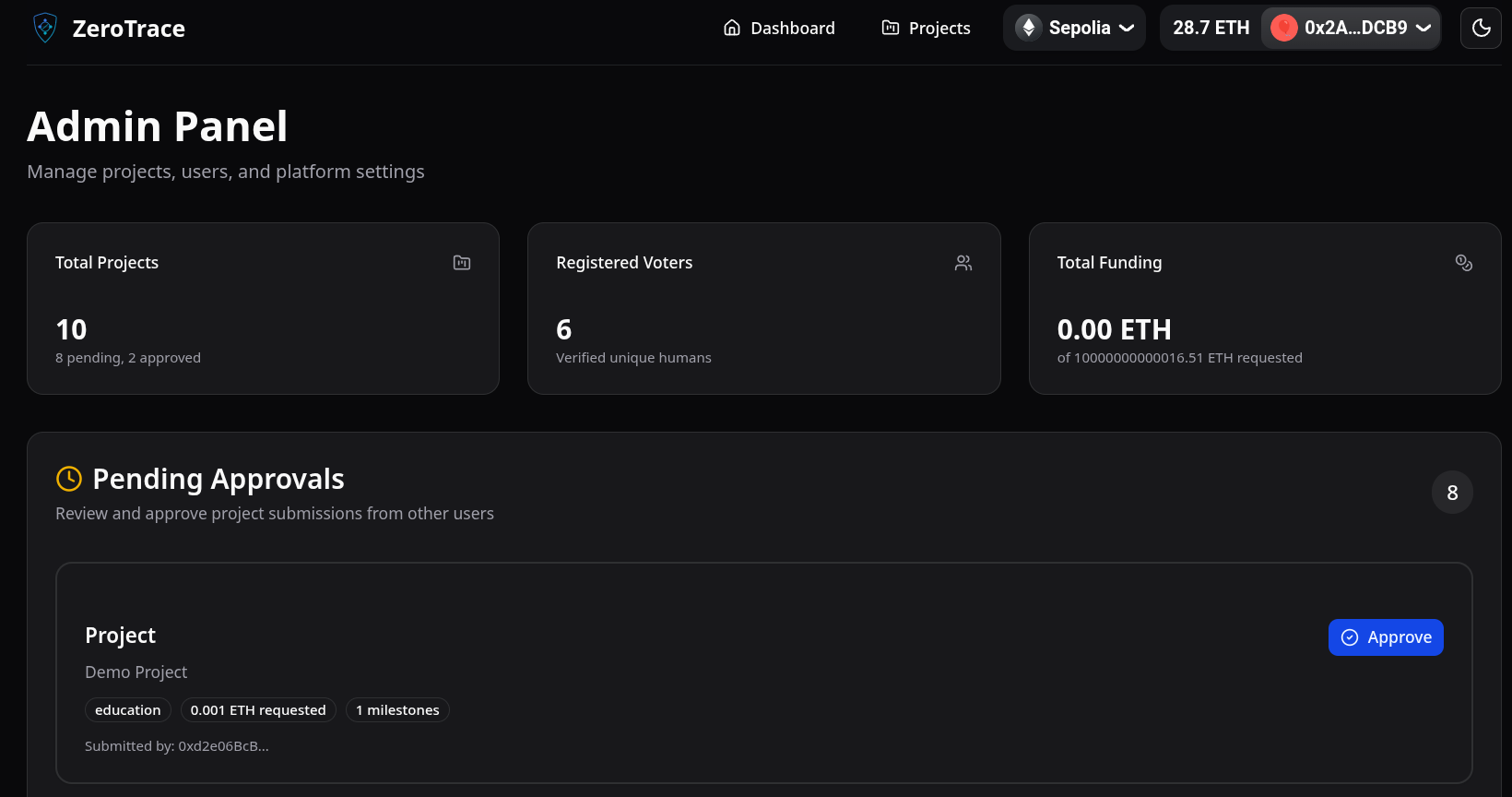
Admin controls were necessary, but they had to be transparent, limited, and auditable on-chain.
In short:
The hardest part wasn’t any single feature—it was making cryptography, economics, and usability work together in a system that is private, fair, and practical.